Linkorite Benchmark · Read October 2, 2026
One Outreach Timeline, Not a Universal Norm
Linkorite’s reported pitch-to-live figures for 2026. They do not describe marketplace listings or pre-arranged placements.
- 38 daysMedian end-to-end
- From pitch submission to a live article with the backlink.
- 14–95End-to-end range (days)
- Low and high totals reported for the same benchmark.
- 3–45Editorial review (days)
- The phase Linkorite calls the least predictable.
The short answer: guest post turnaround depends on where the clock starts and stops, so there is no honest single average. A fresh outreach timeline, a managed-service window, a marketplace listing’s publication time, indexing and any SEO effect are five different clocks. Linkorite reports a 38-day median from pitch to live link for its 2026 outreach benchmark, but that figure describes one process, not every guest post.
- Name the clock: outreach, managed-service, listing, indexing and SEO-effect timelines measure different spans.
- Six stages: pitch, acceptance, content, revisions, publication queue and live placement each take their own time.
- One benchmark: Linkorite reports a 38-day median pitch-to-live for outreach, with editorial review the least predictable phase.
- Why quotes differ: pre-arranged inventory, buyer-supplied content and editor queues remove or add whole stages.
- Publication is not indexing: live placement ends the delivery clock; indexing and rankings sit outside any supplier’s window.
- Late orders: find the late milestone, check the agreed window and anything waiting on you, then ask for a revised date.
Which Turnaround Time Are You Being Quoted?
“How long does a guest post take?” has no single answer, because people quote different clocks. Before you compare two figures, find out where each one starts and where it stops.
- Fresh outreach timeline: from the first pitch to a new publisher until the article is live. Every stage is still open, including whether the publisher says yes.
- Managed-service timeline: the window a vendor quotes for its own process. It may start at payment, at brief approval or when content is signed off, and it may or may not include the time a draft spends with you.
- Marketplace listing publication time: the expected publication window a specific listing shows. A marketplace listing represents an available placement opportunity, so the marketplace workflow does not begin with cold prospecting or a fresh pitch to find a willing site.
- Indexing time: how long until Google crawls and indexes the published URL. No publisher or seller can guarantee whether or when Google will crawl and index the published URL.
- Time to any SEO effect: whether, and when, the link changes anything you measure. This is not a turnaround figure, and nobody can honestly quote one.
The first three are delivery clocks. The last two start after delivery and belong to a different conversation. A one-week quote and a five-week benchmark can both be accurate while measuring completely different spans.
The Google results we checked for this question included vendor service pages and a 2019 vendor FAQ, each quoting its own window. Those figures describe each vendor’s process, we could not verify them, and none is repeated here.
Source: Google results for “guest post turnaround time”, checked October 2, 2026.
What Happens Between the Pitch and the Live Link?
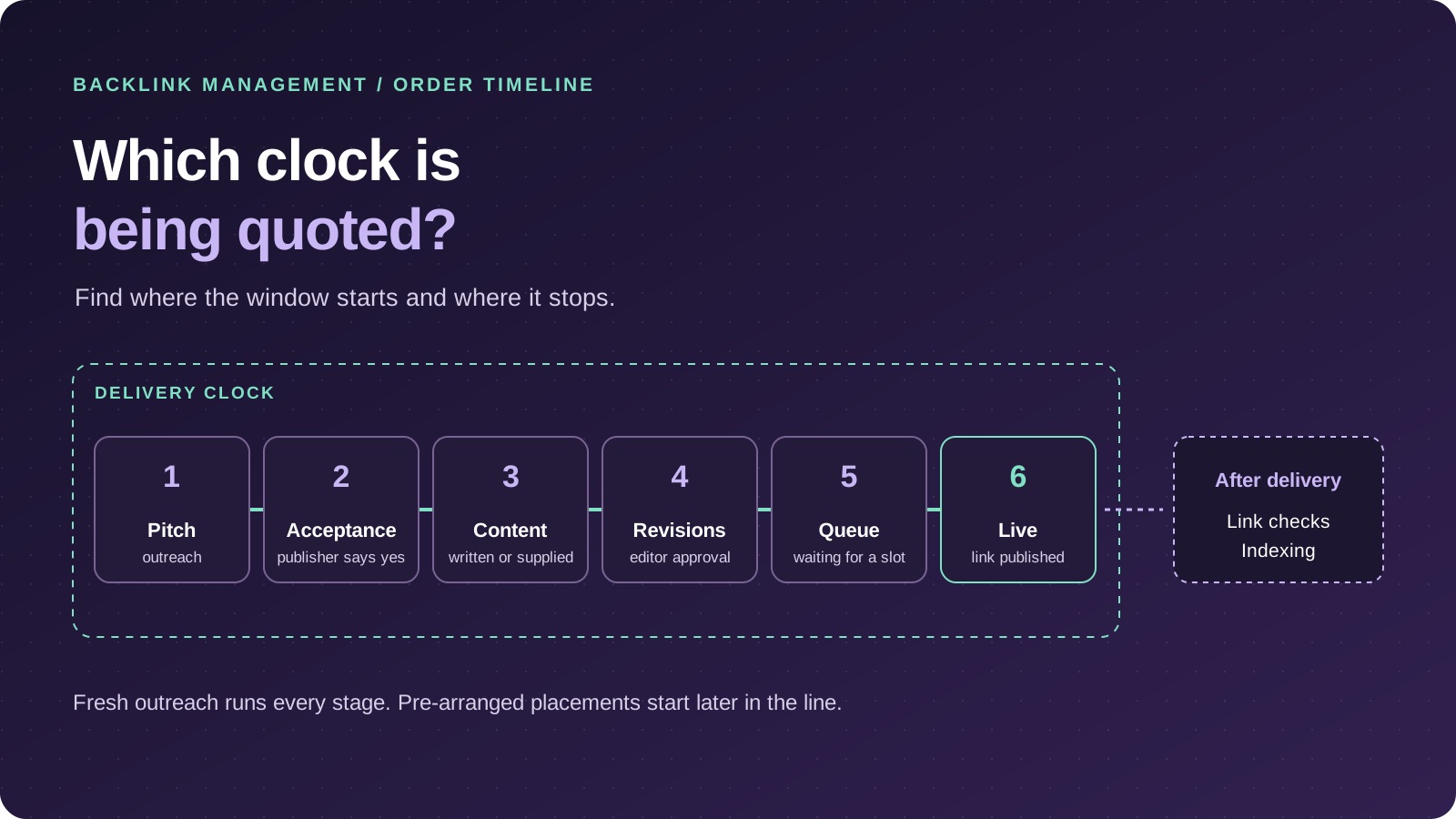
A guest post can pass through six stages. Not every arrangement includes all of them, and that is the main reason quotes differ.
- Pitch or outreach: you, or someone working for you, proposes a topic to a publisher.
- Publisher acceptance: the publisher agrees to take the post, sometimes with conditions on topic, length or links.
- Content: the article is written by you, by a vendor’s writer or by the publisher’s team.
- Revisions and editorial approval: the editor reviews the draft, asks for changes and signs it off.
- Publication queue: the approved post waits for a slot in the publisher’s schedule.
- Live placement: the article is published at a URL you can open, with your link in it.
Pitching and acceptance only exist when the relationship is new. Content may already be finished if you supply it. Revisions can take one round or several, and the queue depends on how much the publisher already has scheduled. Each stage is a separate place where time goes, and a separate place to look when something stalls.
What Does Linkorite’s Benchmark Show?
Linkorite publishes a benchmark that splits the timeline into phases. It describes the time from guest post pitch submission to a live published article with a backlink, which makes it a fresh-outreach timeline, not a figure for pre-arranged placements.
| Phase | Low (days) | Median (days) | High (days) |
|---|---|---|---|
| Pitch to acceptance | 3 | 10 | 30 |
| Content creation | 2 | 7 | 21 |
| Editorial review | 3 | 14 | 45 |
| Publication queue | 1 | 7 | 30 |
| Total end-to-end | 14 | 38 | 95 |
Source: Linkorite, “Guest Post Turnaround Time”, metric “Total turnaround time”, unit days, year 2026, read October 2, 2026. The page does not state its methodology or sample size.
Three points are worth taking from the table:
- Editorial review is the wild card. Linkorite calls it the least predictable phase, and its reported range for that phase alone runs from 3 to 45 days.
- The columns don’t all add up. The four phase medians sum to the 38-day total median, but the phase lows and highs do not sum to the end-to-end low and high. Adding up the high column will not give you Linkorite’s worst case.
- It is one benchmark for one kind of process. It is Linkorite’s reported figure for pitch-to-live outreach, not a universal norm, and it says nothing about how long a marketplace listing or a vendor’s existing inventory takes.
Why Do Turnaround Quotes Vary So Much?
Most of the difference comes from which stages are already finished before the clock starts.
Pre-Arranged Inventory vs Fresh Outreach
With fresh outreach, nobody yet knows whether the publisher will say yes. A pitch can go unanswered, be declined or need a second topic. Pre-arranged inventory starts later in the process. With an available marketplace listing, you are choosing from an existing placement opportunity rather than starting with cold outreach to find a publisher.
Buyer-Supplied Content vs Written Content
If you supply the article, the content stage happens before the order, on your schedule. If the vendor or publisher writes it, the writing sits inside the quote, and so may any wait for your approval. Ask whether the window pauses while a draft is with you. A delay that looks like the supplier’s can turn out to be a draft waiting in your own inbox.
Editor Queues
Even after approval, the post waits for a slot. Publication queues vary by publisher and workload. Some opportunities move through the queue quickly; others are scheduled further ahead. The queue belongs to the publisher, so a vendor can report on it without necessarily being able to shorten it.
What Happens After the Post Goes Live?
Publication stops the delivery clock. It also starts a set of checks that are yours to run.
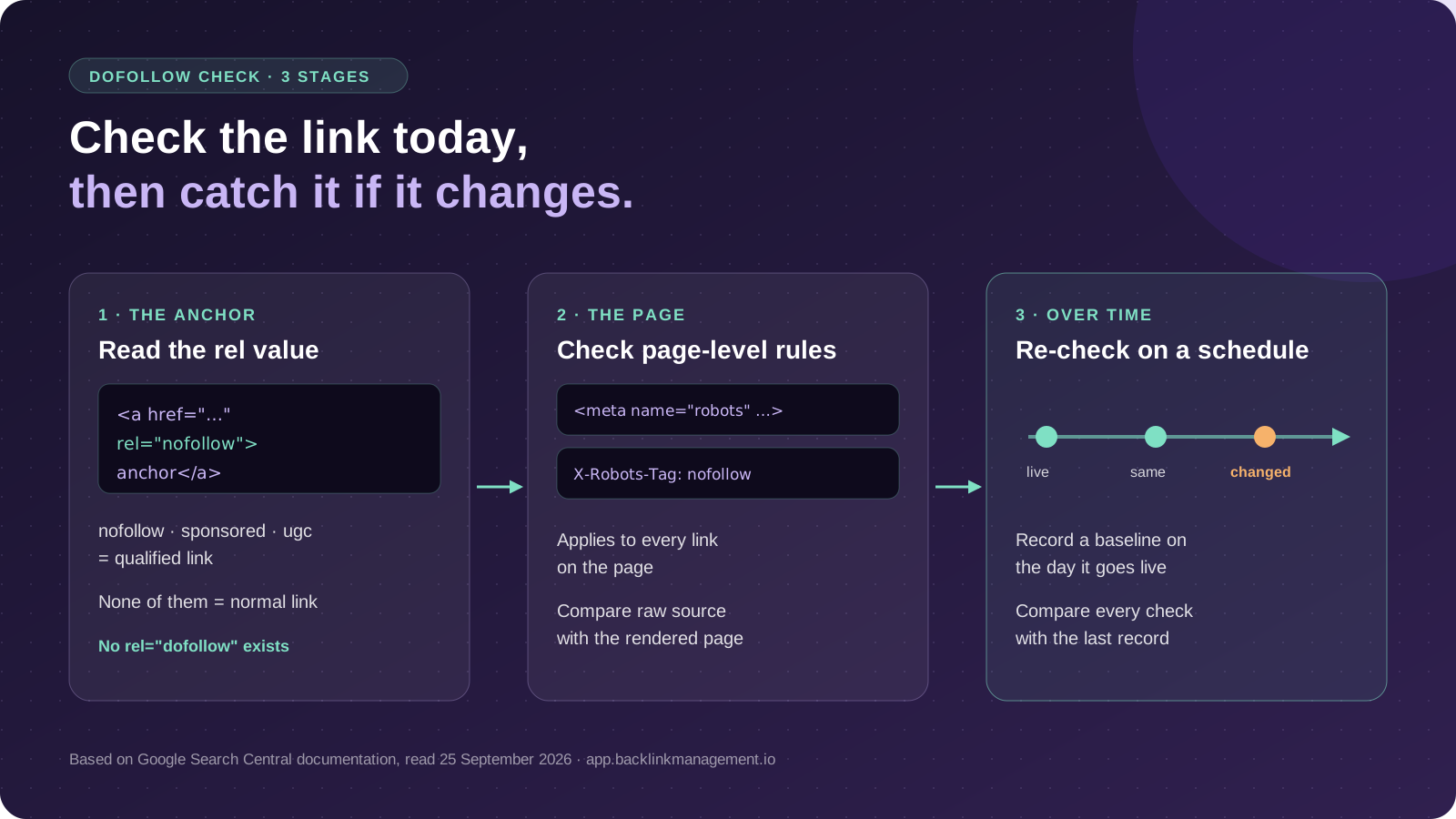
Open the URL and confirm four things: the article is publicly reachable, the link is present, the anchor matches what was agreed and the destination is the page you expected. Then read the link’s rel attribute. Our guide on how to check if a backlink is dofollow covers the attribute and page-level robots rules. Record what you saw and the date you saw it.
Indexing runs on a different clock. No publisher or seller can guarantee whether or when Google will crawl and index the published URL, so a live post that is not yet indexed is not a late post. For the same reason, treat any turnaround quote that promises indexing by a set date with caution. Rankings are further away still: no delivery window tells you when, or whether, a link will have a measurable effect.
What Should You Ask Before Ordering?
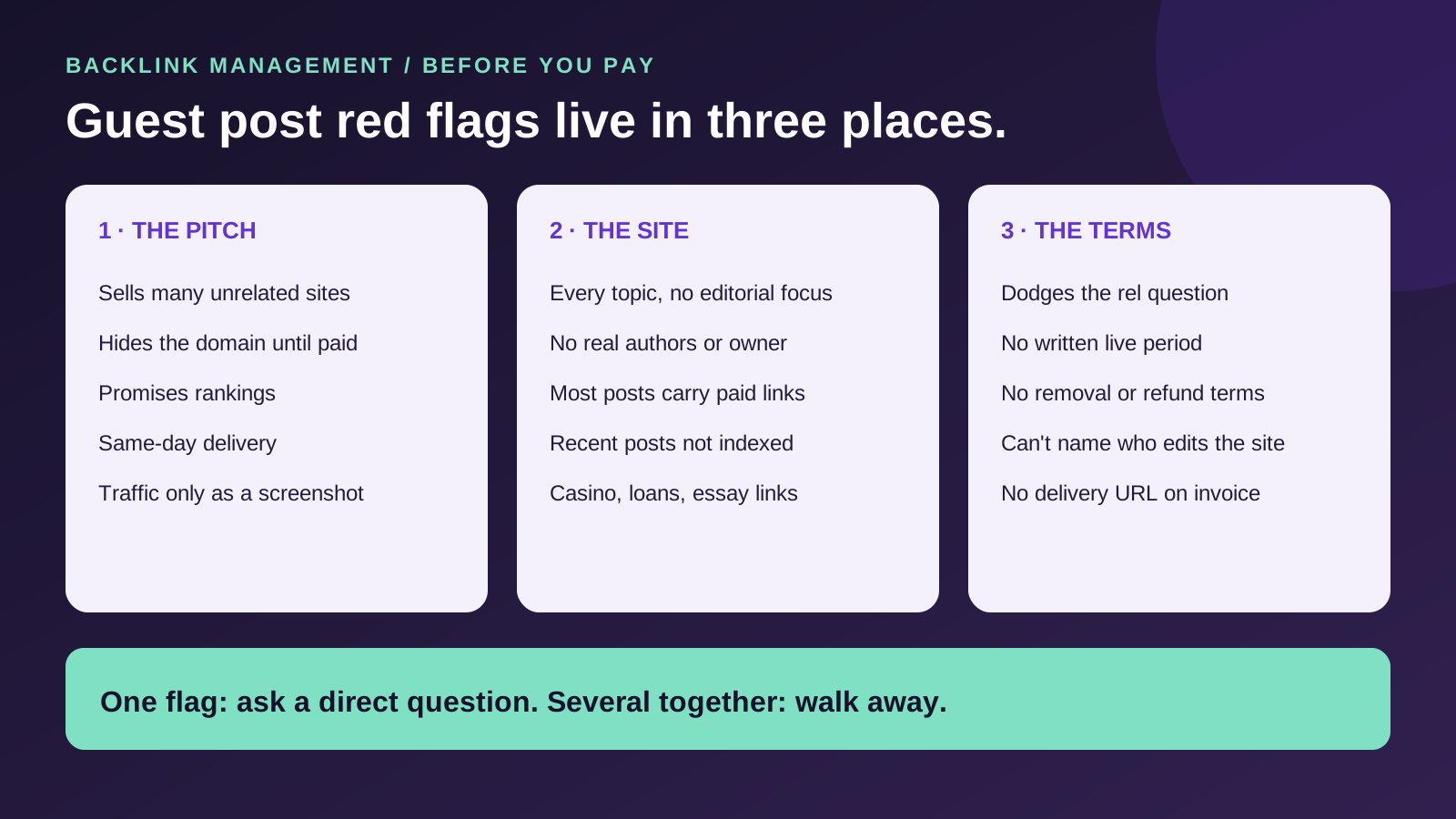
Timing questions belong in the same pre-order review as the site itself, and our list of guest post site red flags covers the quality side. On timing, ask:
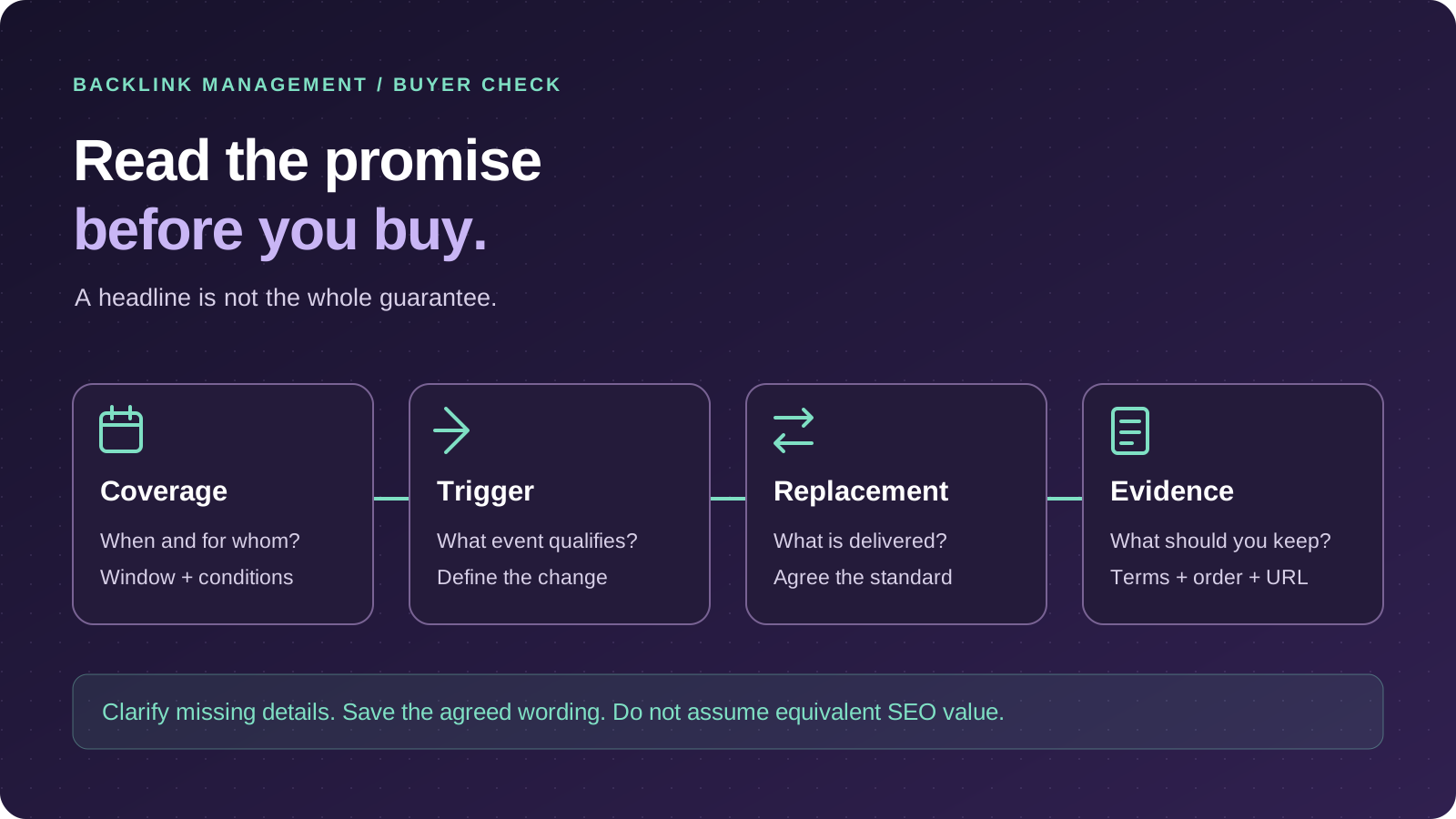
- Start: does the window begin at payment, at topic approval or when final content is received?
- Stop: does it end when the post is published, when you receive a report or at some other point?
- Content: who writes the article, and is writing time inside the window?
- Revisions: how many rounds are included, and does the clock pause while a draft waits for you?
- Editorial control: can the publisher still reject or change the post after accepting it?
- Queue: is the window a firm publication date or an estimate that depends on the publisher’s calendar?
- Status: how will you hear about progress, and who should you ask?
- Missed window: what happens if the date passes?
Keep the answers with the order. A window agreed in writing is easier to point back to than one you remember.
Listings in our backlink marketplace can show an expected publication-time range before you order, alongside the site’s other catalogue details, where that field is available. The range belongs to the listing it appears on. A short window on one site tells you about that site, not about marketplace guest posts in general. You also submit the article yourself, so the stated window is easier to plan around when your content is ready before you order.
What Should You Do When a Guest Post Is Late?
Work through it in order. The first few steps take minutes and often settle the question.
- Establish which milestone is late. Acceptance, content, approval and publication are different problems. “Late” without a stage is hard to act on.
- Check the agreed publication window. Compare today with the window you were actually given, counted from the start point you agreed, not the one you assumed.
- Check whether content or revisions are outstanding. An article you haven’t submitted, an unanswered revision request or an unapproved draft can hold up the whole order.
- Ask the supplier or publisher for status. Name the order, the stage you think it is at and the window you were quoted. A specific question tends to get a specific answer.
- Confirm whether a revised date exists. If the date has moved, get the new one in writing and record it beside the original.
- Once it is live, verify the placement. Check the URL, the link, the anchor and the link attribute before you mark the order complete.
Late before publication and lost after publication are different problems. If the post went live and the link has since disappeared or changed, that is no longer a turnaround question; see what to do when a guest post link is removed.
Keep the dates together: the quoted window, any revised date, the publication date and your first check. Backlink Management keeps marketplace order activity in your account, and once a placement becomes part of your backlink profile, the Backlink Manager gives you a place to organise and review the backlink information alongside your wider SEO workflow.
BACKLINK MANAGEMENT
Stop building links by hand. Put them on automation.
Automated link building that keeps running month after month, with every placement recorded, re-checked and reported from the same workspace that holds your Search Console data.
Questions
Guest Post Turnaround Questions
It depends where the clock starts. Linkorite reports a 38-day median, with a 14–95 day range, from pitch to live link for its 2026 outreach benchmark (https://linkorite.com/benchmarks/guest-post-turnaround-time, read October 2, 2026). Pre-arranged placements skip stages, so compare the window quoted for the specific vendor or listing.
Not in the definition used here. Delivery ends when the post is live; whether or when Google indexes the URL is a separate event that a publisher or seller cannot guarantee.
In Linkorite’s benchmark, editorial review is the least predictable phase, reported at 3 to 45 days (https://linkorite.com/benchmarks/guest-post-turnaround-time, read October 2, 2026). An article or revision waiting on the buyer can also hold up an order.
No. An expected publication-time range shown on a listing applies to that listing only, where the field is available. It is not a general figure for marketplace guest posts.
Where this lands
Verdict
- Who this suits
- Site owners and agencies who want to read a turnaround quote accurately, plan around each stage and handle a late order without guesswork.
- Who it does not suit
- Anyone looking for a guaranteed delivery date, an indexing or ranking timeline, guest post pricing or a supplier recommendation.
- What we could not verify
- Linkorite’s methodology and sample size are not stated on its benchmark page, read October 2, 2026. Vendor-quoted windows in the Google results were not verified. We did not measure actual delivery times for any supplier or marketplace listing.