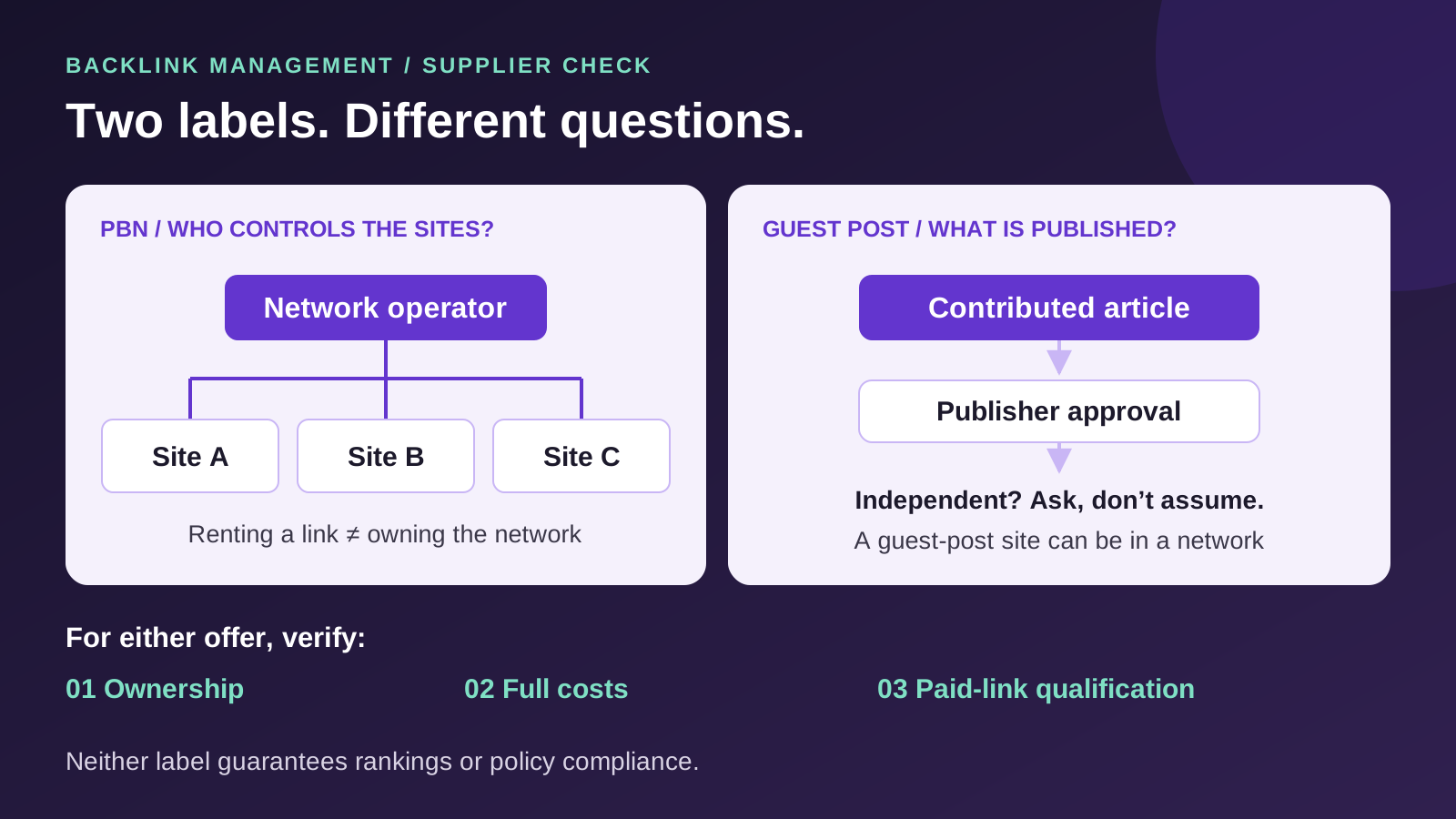
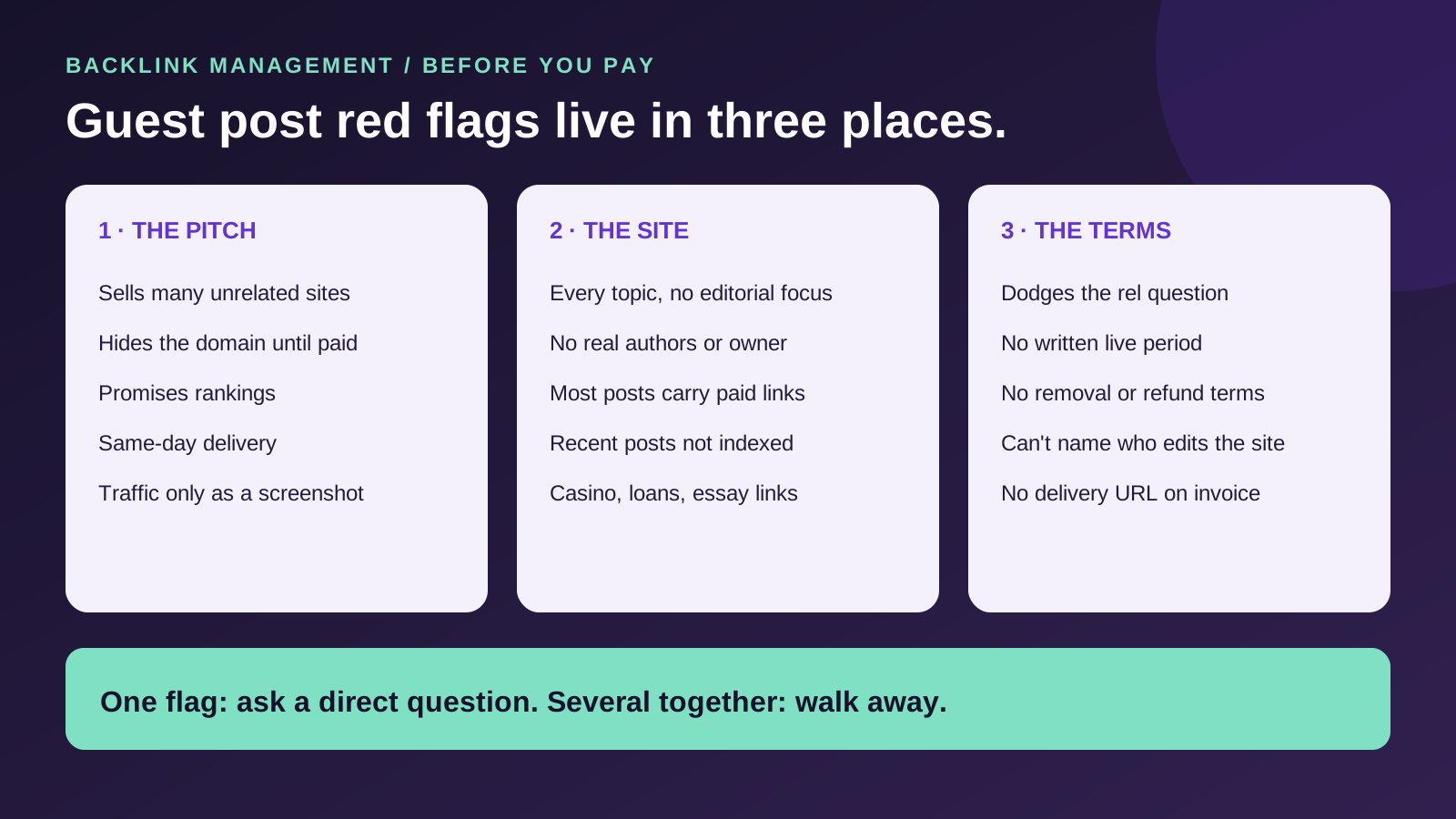
The strongest guest post site red flags are a seller who hides the domain or offers many unrelated sites, a site that publishes on every topic with no identifiable editor, recent posts that are not indexed, and a seller who will not say how the link will be marked. One flag is a reason to ask a direct question. Several together are a reason to walk away before any money changes hands.
- Three places: red flags show up in the pitch, on the site and in the deal terms. Check all three.
- 15 checks: five per area. None takes more than a few minutes without paid tools.
- Count, don’t react: 1 flag means ask the seller directly; 3 or more means walk away.
- Policy first: Google's spam policy lists paid guest posts with ranking-credit links as link spam;
sponsoredornofollowis the compliant form. - DR is not proof: a domain metric says nothing about readers, editors or whether the post will stay indexed.
- Save evidence at delivery: the live URL, raw HTML and written terms are what you need if the link changes later.
The Short Answer
A guest post site is a bad buy when the seller hides who runs it, the site has no real audience or editor, or the seller will not put the link terms in writing. Every one of those is checkable before you pay.
This checklist sits inside the backlink manager workflow: vet the seller first, then record what was delivered. It is a buyer's filter, not a way to make a paid ranking link safe.
- The pitch: who is selling and what they promise.
- The site: whether real people read and edit it.
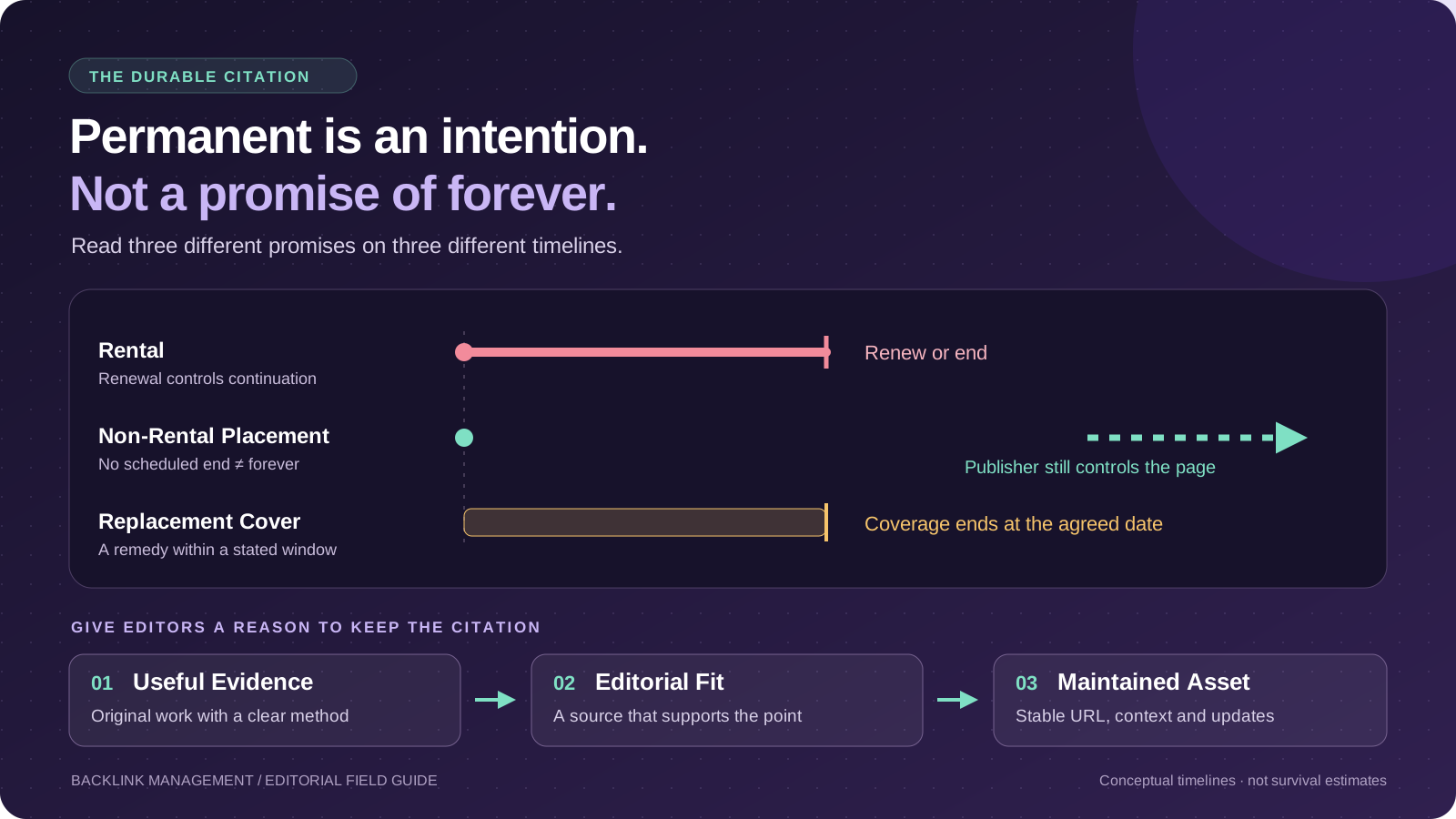
- The terms: what you actually get in writing.
Red Flags in the Pitch
The pitch usually tells you what kind of seller you are dealing with. A publisher sells its own site. A reseller sells a list.
- 1 · Many unrelated sites in one email. A seller offering tech, finance and health domains at once is almost always an intermediary who controls none of them.
- 2 · The domain is hidden until you pay. There is no legitimate reason to keep the URL secret from a buyer.
- 3 · Ranking promises. No publisher controls how Google weighs a link, so "guaranteed page one" is a claim nobody can back.
- 4 · Same-day or 24-hour delivery. Real editorial review takes time. Instant publication suggests there is no review at all.
- 5 · Traffic shown only as the seller's screenshot. A dashboard image from the seller is not independent evidence.
The SaaS Library's five-point test makes the same point about ranking language and tagging answers. Setproduct describes a founder who paid $450 for a placement on a site that was later deindexed; treat that as one reported anecdote, not a rate.
Sources: The SaaS Library, "Is Guest Posting Still Worth It in 2026?" (August 11, 2026) and Setproduct, "13 red flags" (September 8, 2026), both read September 23, 2026.
Red Flags on the Site Itself
Open the site and read it the way a visitor would. Five minutes here catches more than any metric.
- 6 · Every topic, no editorial focus. Recipes, crypto and personal injury law on one blog means the audience is buyers, not readers.
- 7 · No identifiable owner or editor. Bylines reading "Admin" or "Editorial Team", and an About page with no names, leave nobody accountable for your post.
- 8 · Nearly every recent post carries a commercial link. Scan the last 20 articles. If most exist to hold a link for an unrelated brand, selling links is the business.
- 9 · Recent posts are not indexed. Search Google for the exact titles of a few recent articles. If they do not appear, your article probably will not either.
- 10 · Bad neighbours. Outbound links to casino, payday loan or essay-writing sites mean your link sits in that company.
Rankchase lists the same patterns for guest post farms, including flatlining traffic, prominent "Write for Us" banners and unnatural outbound link ratios.
Source: Rankchase, "What Are the Red Flags of a Guest Post Farm?", read September 23, 2026. The indexing check is our recommended method.
Red Flags in the Deal Terms
A seller who is confident in the placement will put it in writing. Vague terms are a red flag in themselves.
- 11 · No straight answer on the link attribute. Ask whether the link will be
dofollow,sponsoredornofollow. Dodging the question is the answer. - 12 · No written live period. "Permanent" with no definition is not a term you can enforce.
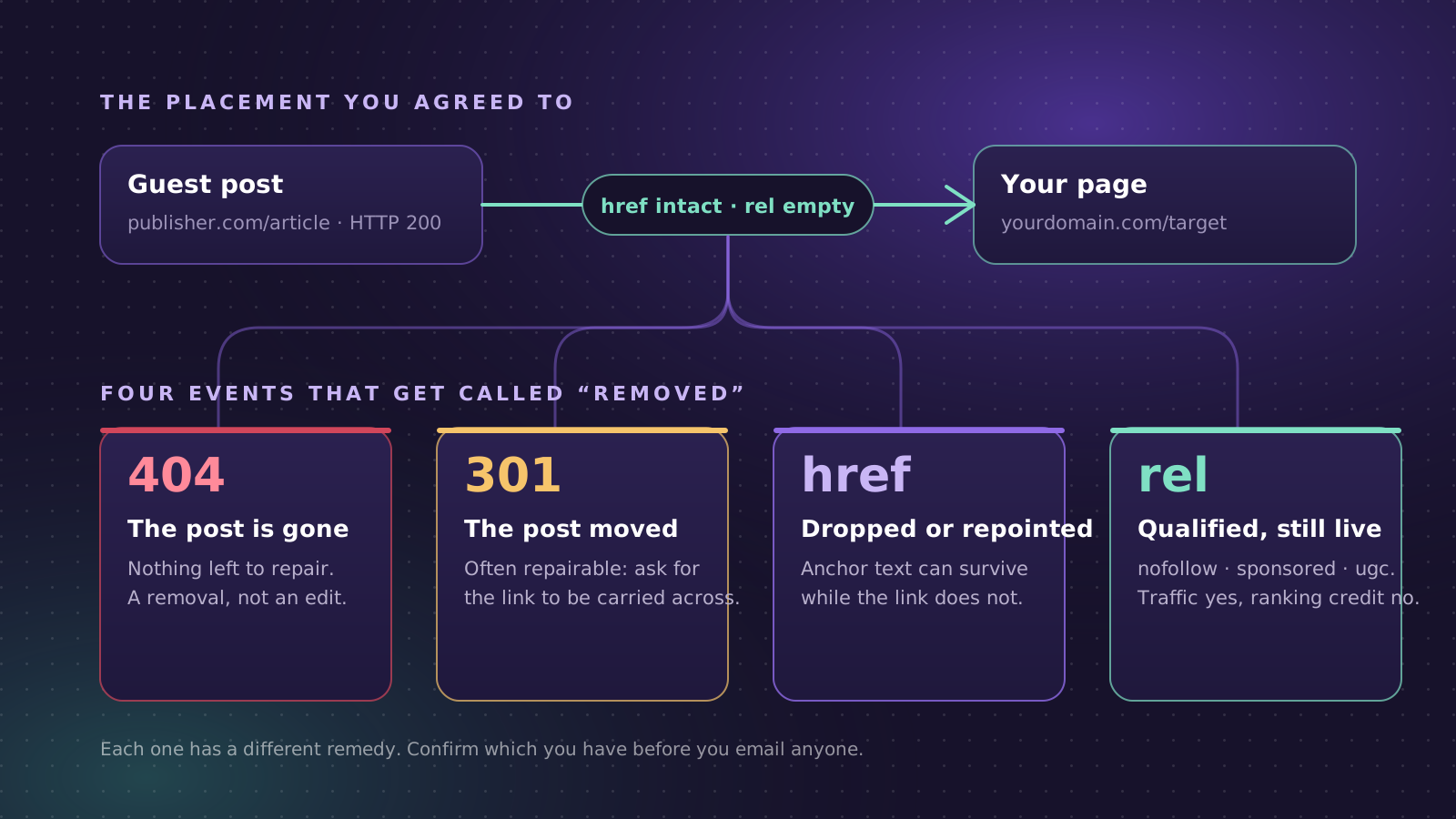
- 13 · No removal, replacement or refund conditions. You need to know what happens if the post disappears in month three.
- 14 · Nobody can name who edits the site. If the seller cannot say whether they own it, work for it or resell it, you cannot judge who will honour the terms.
- 15 · No delivery details on the invoice. The receipt should name the target URL, the anchor and the publishing domain.
When a seller does describe a duration, read our guide to permanent backlink terms before treating it as a guarantee.
Method: our recommended purchase terms, reviewed September 23, 2026. No vendor quoted here was asked to confirm them.
What Google's Policy Actually Says
This matters more than any site metric. Google's spam policy defines link spam as creating links "primarily for the purpose of manipulating search rankings."
Its examples include exchanging money for links or for posts that contain links. They also include advertorials where payment is received for articles containing links that pass ranking credit, and optimized-anchor links in guest posts.
- Allowed: Google says buying and selling links for advertising is not a violation when the link carries
rel="nofollow"orrel="sponsored". - Preferred attribute: Google's link-qualification guide says
sponsoredis preferred for paid placements, andnofollowis still acceptable. - Not established: the policy does not publish a penalty rate, and we cannot give you one.
So the attribute question in check 11 is not a technicality. A seller who insists every paid link is dofollow is selling the arrangement the policy names.
Sources: Google spam policies (page last updated August 28, 2026) and Qualify your outbound links (last updated December 10, 2025), both read September 23, 2026.
Why Domain Rating Is Not a Quality Check
Domain Rating and Domain Authority estimate the strength of a site's link profile. They do not measure readers, editorial standards or whether a site will stay in Google's index.
- Metrics can be built: links from expired domains or networks can lift a score without adding an audience.
- Low scores can be fine: a small, focused niche site with a named editor may be a better placement than a high-score general blog.
- Use it as one input: check the metric after checks 6 to 10, not instead of them.
If the seller operates a network of sites, the question changes. Our comparison of PBN links and guest posts covers what to ask about network ownership.
What Buyers Actually Worry About
A Reddit thread on r/SEO from February 2023, "Why is everyone charging for guest posts these days?", had 65 comments when we read it. The original poster said sites rated DR 20 to 40 were quoting around $100, some over $200.
Their stated fear was specific: that a seller might take the money without publishing, or publish and later take the post down.
- Useful signal: buyers worry most about non-delivery and later removal, not about the metric itself.
- A counterpoint: one site owner in the thread said they both buy and sell guest posts and see free placements as unpaid advertising.
- Limitation: one thread, self-selected and three years old. The quoted prices are one person's experience, not a market rate.
Community source: r/SEO discussion, posted February 26, 2023, read September 23, 2026.
A 10-Minute Vetting Routine
Run this on any offer that survives the pitch. Stop at the first step that fails badly.
- Get the exact domain and the name of whoever edits it.
- Read two recent articles in full. Would a real reader get anything from them?
- Scan the last 20 posts for topic spread and outbound commercial links.
- Search three recent titles in Google to confirm they are indexed.
- Ask in writing about the link attribute, live period and removal terms.
- Check the metric last, as a tiebreaker rather than a verdict.
If it passes, save the evidence the day it goes live: the delivered URL, a raw HTML copy and the agreed terms. Our guide to what to do when a guest post link is removed explains why that baseline decides every later dispute.
Verdict: Count the Flags Before You Count the Cost
This checklist suits agencies and site owners who buy placements and want a repeatable filter before paying. It does not suit anyone looking for a way to hide paid ranking links from Google.
One red flag is a question for the seller. Three or more across the pitch, the site and the terms is a pass, whatever the price or metric.
We did not buy placements, audit any seller's inventory or measure how often flagged sites are later deindexed. The checks are our recommended method, built from Google's published policy and the buyer guides cited above.
Keep each offer, its answers and the delivered placement in one backlink management workspace, or explore automated backlink building.
BACKLINK MANAGEMENT
Stop building links by hand. Put them on automation.
Automated link building that keeps running month after month, with every placement recorded, re-checked and reported from the same workspace that holds your Search Console data.
Questions
Guest Post Red Flags: Questions
A site with no identifiable owner or editor that publishes on every topic. Nobody is accountable for your post, and the audience is link buyers rather than readers.
No. Domain Rating estimates link-profile strength, not readership or editorial standards, and it can be inflated. Check the site itself first.
Google's spam policy says paid links should carry rel="sponsored" or rel="nofollow". A paid link that passes ranking credit is an example of link spam in that policy.
Search Google for the exact titles of a few recent articles on the site. If they do not appear, new posts may not be indexed either.
Our recommended rule: one flag means ask the seller a direct question; three or more across the pitch, site and terms means walk away. This is a working rule, not a measured threshold.
Where this lands
Verdict
- Who this suits
- Agencies and site owners who buy guest posts and want a repeatable filter across the pitch, the site and the deal terms before paying.
- Who it does not suit
- Anyone looking for a way to hide paid ranking links, or for a guarantee that a vetted placement will improve rankings.
- What we could not verify
- No placements were purchased and no seller inventory was audited. We did not measure how often flagged sites are deindexed or links removed. The $450 anecdote is Setproduct’s report and the Reddit prices are one poster’s experience. The 1-versus-3 flag rule is our working recommendation, not a measured threshold. Sources were read September 23, 2026.