The short answer: "Foundational backlinks" is an SEO industry term, not a Google category. It usually means the first basic links to a site: its own social and business profiles, relevant directories, local citations and partner listings. The useful ones are genuine, relevant references to your business. How many are worth building depends on your industry, location and where your customers actually look. Google's spam policy names automated link creation and low-quality directory or bookmark links as link spam, so bulk foundation packages are where the risk sits. Build the genuine references, record them, then put your effort into links someone chose to give you.
- Definition: an industry label for early profile, listing, directory and partner links; Google has no official foundational-link category or minimum number.
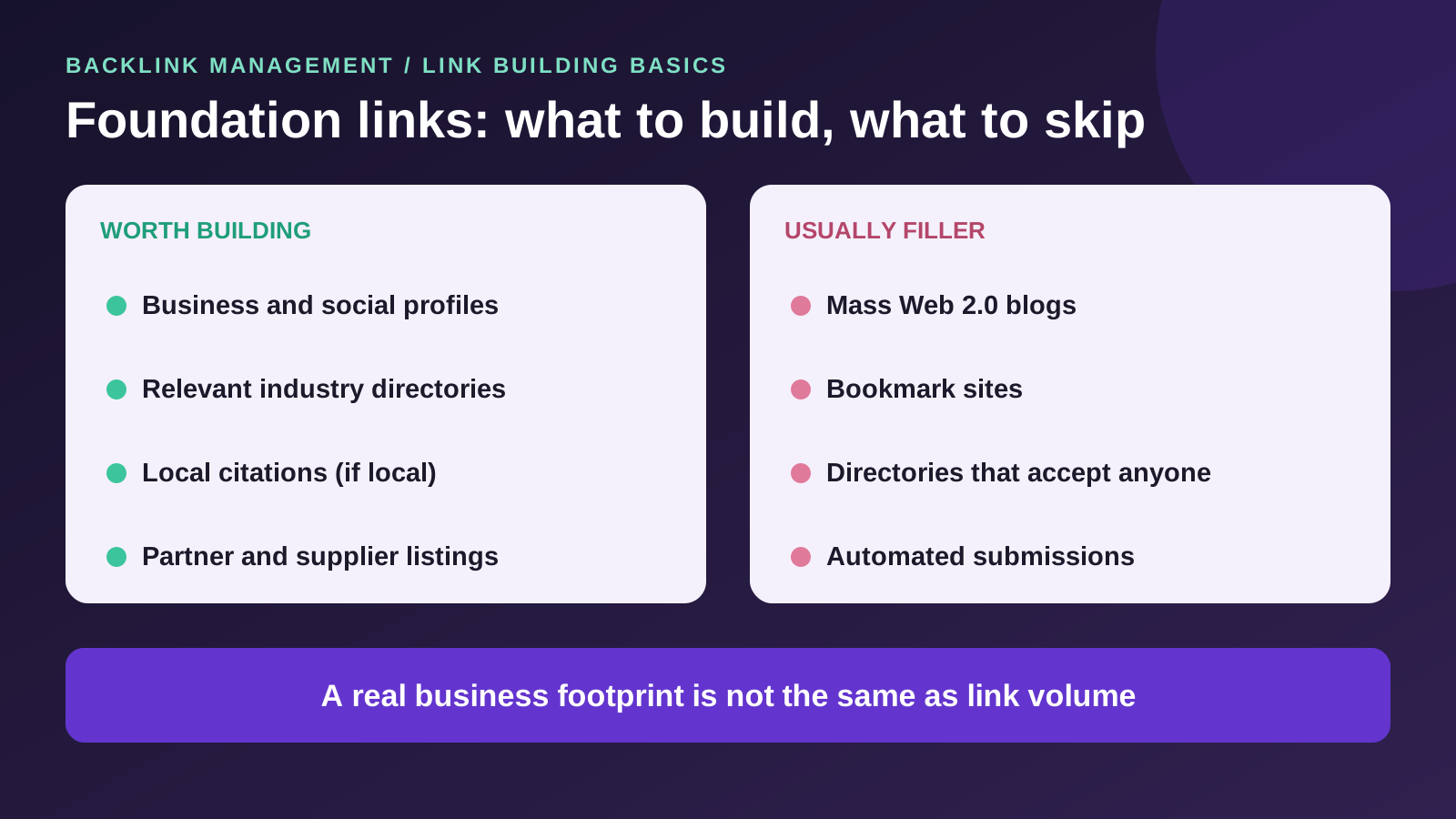
- Worth building: genuine profiles, relevant industry directories, local citations if you serve a local area, and partner or supplier listings.
- Largely filler: mass Web 2.0 blogs, bookmark sites and general directories that accept anyone.
- Policy: Google lists automated link creation and low-quality directory or bookmark links as link spam examples.
- Next step: once the relevant references exist, editorial links and properly qualified guest posts are a better use of the budget than more profiles.
What Are Foundational Backlinks?
Foundational backlinks are the basic links a website usually gets first: its own social and business profiles, listings in directories, local citations and mentions on partner or supplier sites. The term comes from the SEO industry. Google does not use it, and it publishes no minimum number of links a new site needs.
Definitions vary by who is selling. My Profit Engine describes them as "core links that lay the foundation of your site's backlink profile" and includes high-authority sites, niche platforms, social media and business directories. Rank Jacker calls them "basic, low-risk, and contextually relevant backlinks" from directories, business listings and profiles. Both are SEO service providers, so read their definitions as industry usage, not as a standard.
The useful way to think about them is as references, not ranking power. A profile or listing can make a business's name, website and other identifying details discoverable. Consistent information across legitimate sources can help establish a clearer business identity, but creating a profile does not independently verify the business. That job is different from earning a link because someone found your page worth citing.
Definitions: My Profit Engine and Rank Jacker, both read November 4, 2026. Both sell link building services.
What Types of Foundation Links Are Worth Building?
The ones worth building are references a real customer or partner might actually use. Most of the rest is filler.
| Type | Examples | Worth the effort? |
|---|---|---|
| Business and social profiles | Your company pages on the networks your customers use, a Google Business Profile if you serve customers in person | Yes, if you will keep them accurate |
| Relevant industry directories | Trade association member lists, curated directories for your sector | Yes, where real buyers browse them |
| Local citations | Local business listings and chamber of commerce pages | Yes for local businesses; little point for a national online business |
| Partner and supplier listings | A supplier's "where to buy" page, an integration directory, a client list | Yes; these are often the most relevant links you will get early |
| Web 2.0 and bookmark links | Free blog subdomains and bookmarking sites created only to hold a link | Rarely; mostly filler |
A local plumber and a national software company do not need the same list. The plumber benefits from accurate local listings that customers search. The software company gets more from integration directories, review platforms in its category and partner pages.
Do Foundational Backlinks Help SEO?
They can help in specific ways, but no one can show that they guarantee a ranking gain. The likely benefits are practical rather than mysterious.
- Discoverability: profiles and listings give people, and search engines, more places to find your business and its website.
- Referral visits: a relevant directory or partner page can send real visitors.
- Clear identity: consistent name, address and website across profiles can make it easier to tell your business apart from others with similar names. This is our inference from how listings work, not a ranking factor Google has confirmed.
- Relevant links: a partner or trade association link comes from a site in your field.
What is not established: that profiles raise Domain Rating or Domain Authority by a predictable amount, that a site needs a set number before it can rank, or that social profiles act as a ranking signal. Some sellers state these as facts. We have not seen evidence for them, so we do not repeat them.
The distinction that matters is between corroborating a real business and manufacturing link volume. Building genuine business references is a finite task with a practical purpose beyond rankings. Manufacturing link volume can consume money and introduce spam risk without creating comparable value.
Are Foundation Backlink Packages Safe?
It depends on how the links are made. Creating genuine profiles and relevant listings for your own business is normal. Buying hundreds of automated submissions is a different activity, and Google's spam policy names it.
Google's list of link spam examples includes:
- "Using automated programs or services to create links to your site"
- "Low-quality directory or bookmark site links"
- Buying or selling links that pass ranking credit
Google also says that buying links for advertising or sponsorship is not a violation when the link is qualified with rel="sponsored" or rel="nofollow", and that sponsored is the preferred value for paid placements. So a paid listing in a real trade directory is not automatically a problem. A package of hundreds of links on low-quality directories built to pass ranking credit is the arrangement the policy describes.
Before buying any package, ask for the list of sites, how the submissions are made and whether a person checks each one. A seller who cannot name the sites is selling volume, not references. Our list of guest post site red flags covers more warning signs, and many apply to foundation sellers too.
Sources: Google spam policies and Qualify your outbound links, both read November 4, 2026.
How Do You Build a Useful Foundation Link Profile?
Start with your real business details and stop when the remaining options stop being relevant. There is no target number.
- Settle your details. Decide the exact business name, address if you have one, and the main website URL you will use everywhere.
- Claim the profiles that matter. Start with the networks and platforms your customers actually use.
- Add relevant directories. Look for trade associations, curated sector directories and, if you serve a local area, local listings.
- Complete each one accurately. Use the same details, a real description and your main website URL where the platform allows a link.
- Ask partners and suppliers. If you resell, integrate with or supply someone, ask whether they list partners.
- Record what you did. Note where you submitted, what got published and when you last checked it.
- Stop at filler. When the only options left are sites no customer would visit, you are done.
When Should You Move Beyond Foundation Links?
Move on once the relevant profiles and listings exist. Another hundred generic profiles is rarely the best use of the next budget.
At that point the links worth pursuing are ones someone chose to give: a citation in an article, a mention in an industry roundup, a link to a useful resource you published, or a placement on a site your audience reads. Each of these takes more work than a profile, and each says more about your page.
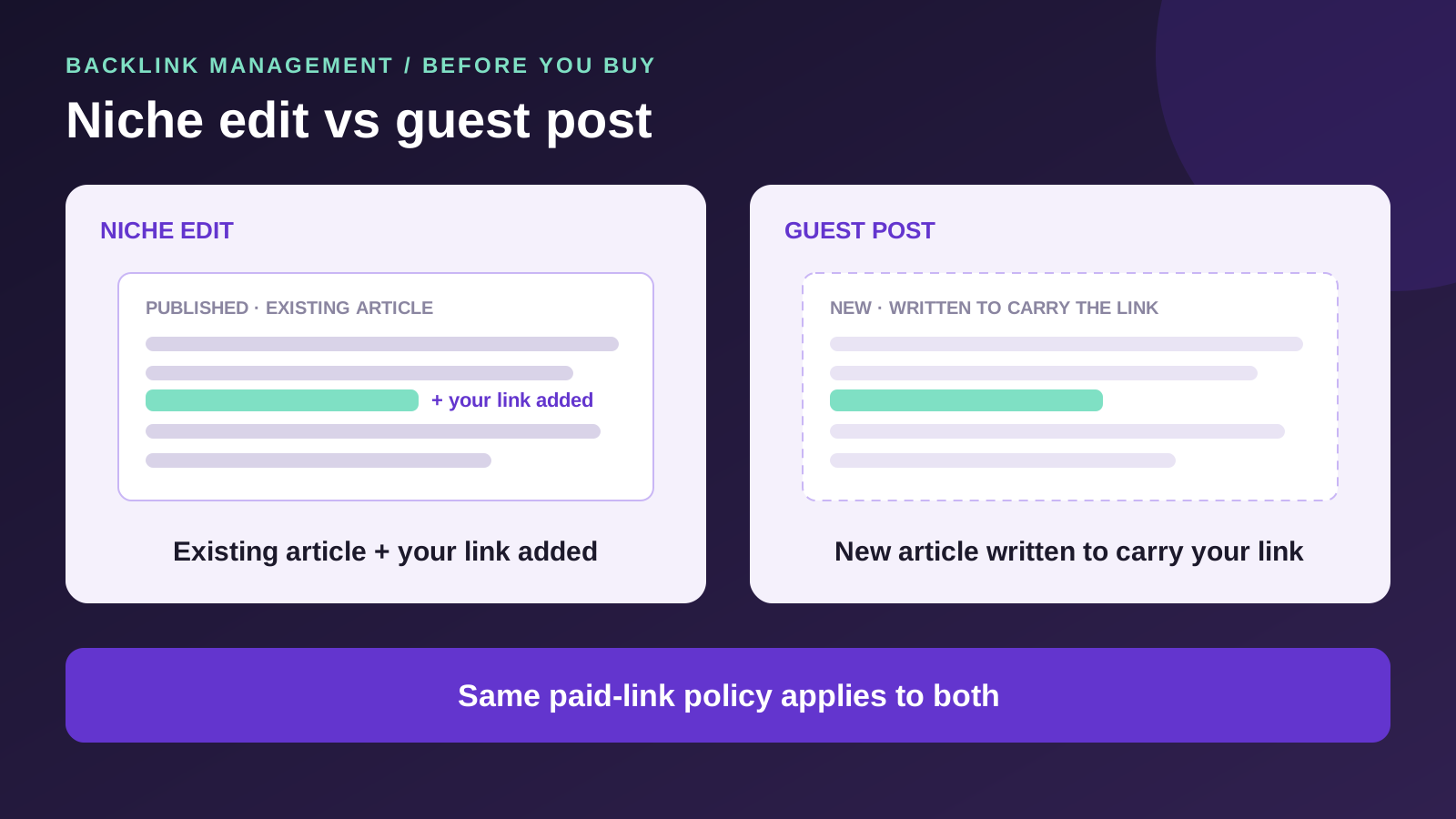
If you pay for placements, the same rules apply as anywhere else. A guest post is a new article written to carry a link. Niche edits add a link to an article that already exists. Either way, check the site first and agree how the link will be qualified.
Durability matters more for these than for profiles. Our guide to permanent backlinks covers what to agree about how long a placement stays live.
How Should You Record Foundational Backlinks?
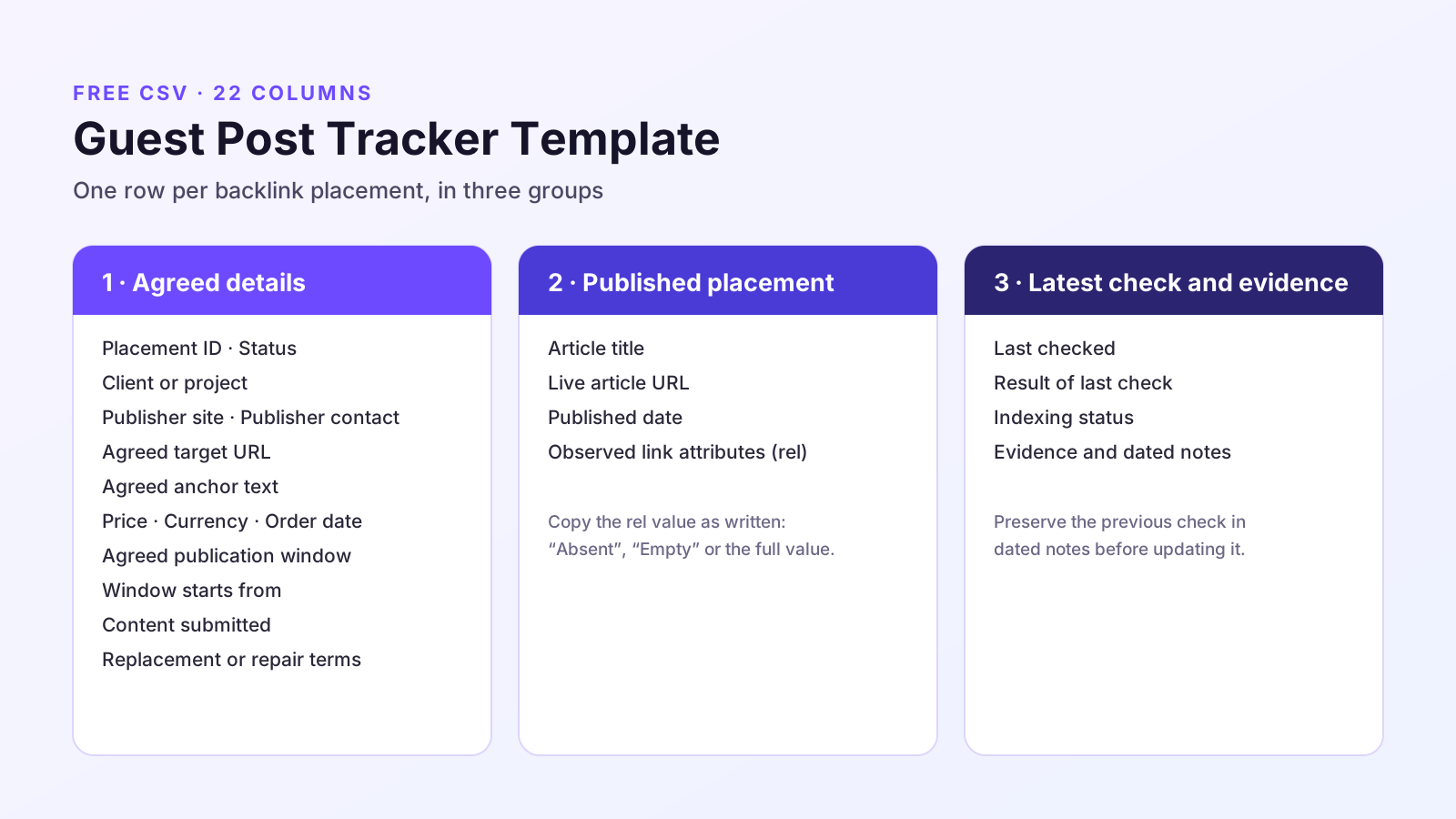
Keep one record for every profile, listing and placement, with the details you would need to check it later. For each one, note:
- the page the link sits on
- the page it points to
- the business name and details you used
- the link attribute (followed,
nofolloworsponsored) - the date you submitted it
- the date you last checked it yourself
Backlink Management is backlink management and tracking software for SEO agencies, link builders and site owners, founded by Brandon King and based in Miami, Florida. In our backlink management software you can keep these records alongside connected Google Search Console data. It does not automatically re-check links or alert you when they disappear, so the last-checked date is yours to keep. Backlink Management does not sell foundational backlink packages.
BACKLINK MANAGEMENT
Finished With Foundation Links? Plan What Comes Next.
Manage your backlink records and explore guest post listings where you supply the article through Backlink Management.
Questions
Foundational Backlink Questions
There is no required number. Google does not publish one. Build the profiles and listings that are relevant to your business and that customers might use, then stop.
Many profile and directory links carry nofollow or ugc. That does not make them worthless: they can still send visitors and confirm business details. Check each link's attribute and record it.
Overlapping but not the same. A citation is a mention of your business name, address and phone number, with or without a link, and matters most for local businesses. Foundation links is a wider industry term that also covers profiles, directories and partner pages.
Be careful. Ask for the full list of sites and how the links are made. Google's spam policy names automated link creation and low-quality directory or bookmark links as link spam. Creating your own genuine profiles usually costs time, not money.
No. Backlink Management helps you organise backlink records alongside connected Google Search Console data, and offers guest post listings where you supply the article. It does not sell foundation links, citations or directory submissions.
Where this lands
Verdict
- Who this suits
- New sites and local businesses setting up genuine profiles, relevant directory listings and partner pages, then recording them.
- Who it does not suit
- Anyone hoping a bulk package of profiles or directory links will lift rankings or a domain metric on its own.
- What we could not verify
- We did not buy a foundation package, test any vendor's fulfilment or measure a ranking change.