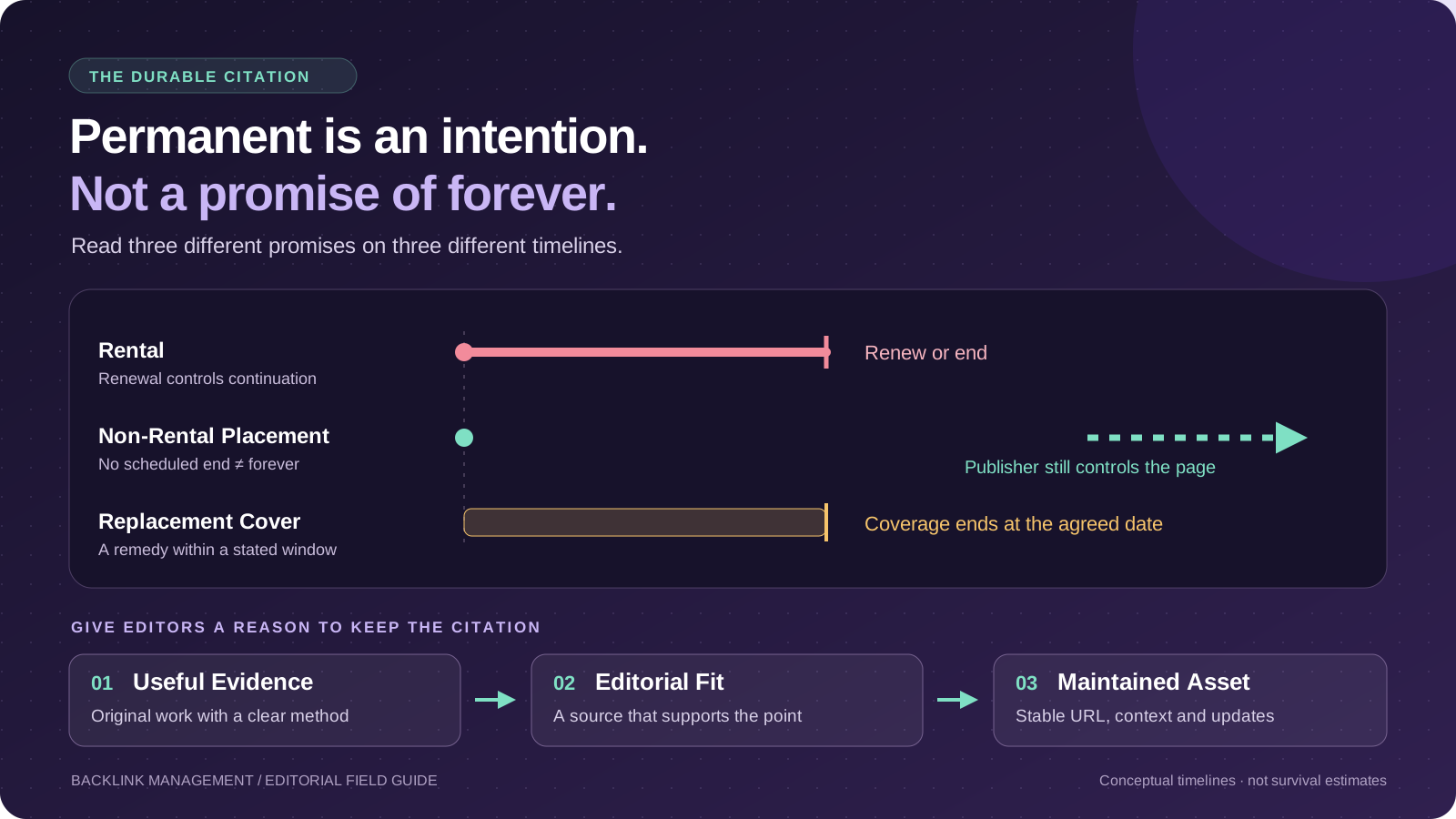
- Permanent means intended longevity: no scheduled removal does not mean guaranteed survival.
- Separate the terms: rental duration, placement lifespan and replacement cover are different promises.
- Earn a reason to stay: publish original evidence that an editor needs to support a specific point.
- Maintain the destination: keep the cited material accessible, accurate and at a stable address.
- Qualify paid links: Google prefers sponsored; nofollow is also accepted for advertising links.
- Keep a dated record: save the source, target, attributes and written terms rather than a lifetime label.
What Permanent Backlinks Actually Mean
The useful interpretation is “no planned removal,” not “immune to change.” A citation can be editorially relevant today and disappear during a later rewrite.
Natural Links describes permanent links as intended to remain while the page exists, without contract renewals. It also acknowledges that sites disappear and editors delete links. That is a vendor definition, not a technical status attached to an HTML anchor.
Backlink Works makes the limit explicit: no provider controls an external website forever. Its examples include page edits, migrations, domain or hosting changes, and redirects.
Sources: Natural Links and Backlink Works pages linked above, read 18 September 2026. Neither establishes an independently measured survival rate.
Treat permanence as a question about intentions and terms. Evaluate relevance, reader usefulness and search-policy compliance separately; a long-lived link can still be a poor placement.
Separate Placement Life From Replacement Cover
Ask which of these arrangements someone actually means:
- Scheduled rental: continued placement depends on renewal or an agreed campaign period.
- Non-rental placement: there is no scheduled removal or recurring payment to retain it, but the publisher still controls the page.
- Finite replacement cover: a provider offers a remedy for specified failures during a stated window, not control forever.
WEB20 Ranker illustrates the distinction. Its headline advertises “Permanent Backlinks, Never Rented,” while its FAQ specifies a 12-month live-link guarantee from placement. The FAQ says permanence cannot be guaranteed on independently owned sites; after that period, continued placement is not guaranteed indefinitely.
Source: WEB20 Ranker, “What Does the 12-Month Live-Link Guarantee Cover?” and “Are High RD Backlinks Permanent or Rented?”, read 18 September 2026. These are advertised terms, not verified fulfilment results.
A non-rental promise and finite cover can coexist. Neither supports forecasting a lifetime of traffic or ranking gains.
Longevity Does Not Override Google’s Link Rules
Google defines link spam by the purpose of manipulating search rankings, not by how long a placement survives. Its examples include buying links for ranking purposes, excessive link exchanges and automated link creation.
For advertising or paid placements, Google prefers the sponsored attribute; nofollow remains acceptable. Do not ask a publisher to remove qualification merely because you paid for a “permanent” link.
Sources: Google’s link-spam policy and outbound-link qualification guidance, read 18 September 2026.
A qualified link can still help a reader reach your resource. Qualification does not make it deleted or worthless, and an unqualified link does not promise rankings.
Separate three checks in your own assessment: whether the link exists, whether the page is indexed, and whether the placement produces useful visits. The word permanent answers none of them. WEB20 Ranker’s cited FAQ also expressly excludes permanent indexation and ranking outcomes from its guarantee.
Build Something Worth Citing
The following is our recommended editorial workflow, not a tested formula for a particular link-survival rate. Start with a question your audience repeatedly needs evidence to answer.
Choose a resource you can genuinely improve:
- Original research: explain the sample, collection dates, method and limitations alongside the findings.
- A practical reference: publish a checklist or worked example that solves a narrow recurring problem.
- A reusable visual: make the source data and explanation available with the diagram, not just an image.
For example, a store shipping fragile products could document its own packaging tests. Publish the test conditions and failures, not a claim that your packaging is universally best. A writer discussing that exact problem then has something specific to cite.
Natural Links lists research, guides and visuals among its acquisition approaches (linked above; read 18 September 2026). Our additional filter is maintenance: choose an asset your team can keep useful after the launch campaign ends.
Match the Resource to an Editorial Need
Read a prospective publication before pitching it. Identify an article or recurring topic where your evidence would help the reader, rather than selecting a domain solely for its score.
Use a short, specific pitch:
- Context: identify the claim or reader question your resource addresses.
- Evidence: explain what is original and link to the relevant section.
- Limitations: disclose commercial interests and what the evidence does not show.
- Editorial choice: let the writer decide whether to cite it and how to describe it.
Contributed articles and expert commentary should stand on their own usefulness. Do not make an exact-match anchor or reciprocal link the condition for participation. Google’s link-spam examples include excessive exchanges and optimized anchors in distributed articles or guest posts (policy linked above; read 18 September 2026).
This approach does not guarantee acceptance. It gives an editor a concrete reason to use your work instead of a request to help your rankings.
Keep the Cited Resource Useful
After publication, maintain the thing the editor actually referenced. Do not quietly replace a useful study with a sales page once it attracts links.
Our recommended upkeep checklist:
- Stable address: avoid unnecessary URL changes and preserve the relevant material when reorganizing your site.
- Transparent updates: date revisions and explain meaningful changes to the method or results.
- Accessible evidence: keep the cited finding available without forcing readers through a lead form.
- Clear ownership: assign someone to review the resource when its underlying information changes.
If a writer cited an older dataset, retain enough context to understand that edition. Replacing yesterday’s figures without an explanation can leave their article making a claim your page no longer supports.
These are practical ways to preserve citation usefulness, not evidence that an editor will retain a link. Backlink Works’ migration and page-edit examples remain relevant even when you maintain your own destination carefully (read 18 September 2026).
Record the Promise, Not Just the Link
Before accepting a placement claim, keep a compact record:
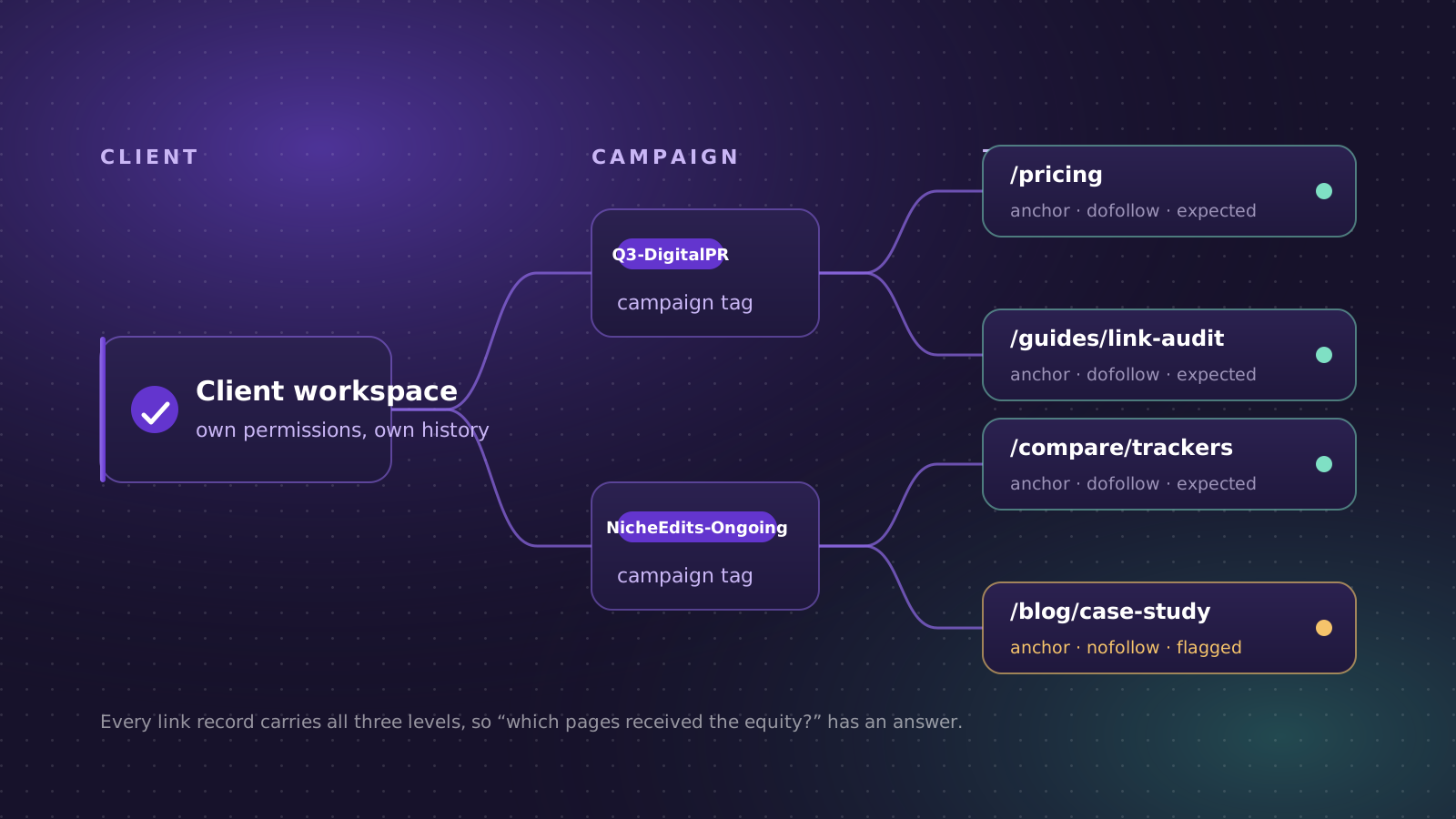
- Source and destination: exact linking URL, target URL, anchor and observed rel attributes.
- Timing: first-seen date, last-checked date and any agreed removal or renewal date.
- Terms: written meaning of permanent, coverage end date, exclusions and claim deadline.
- Evidence: saved placement snapshot, agreement and responsible contact.
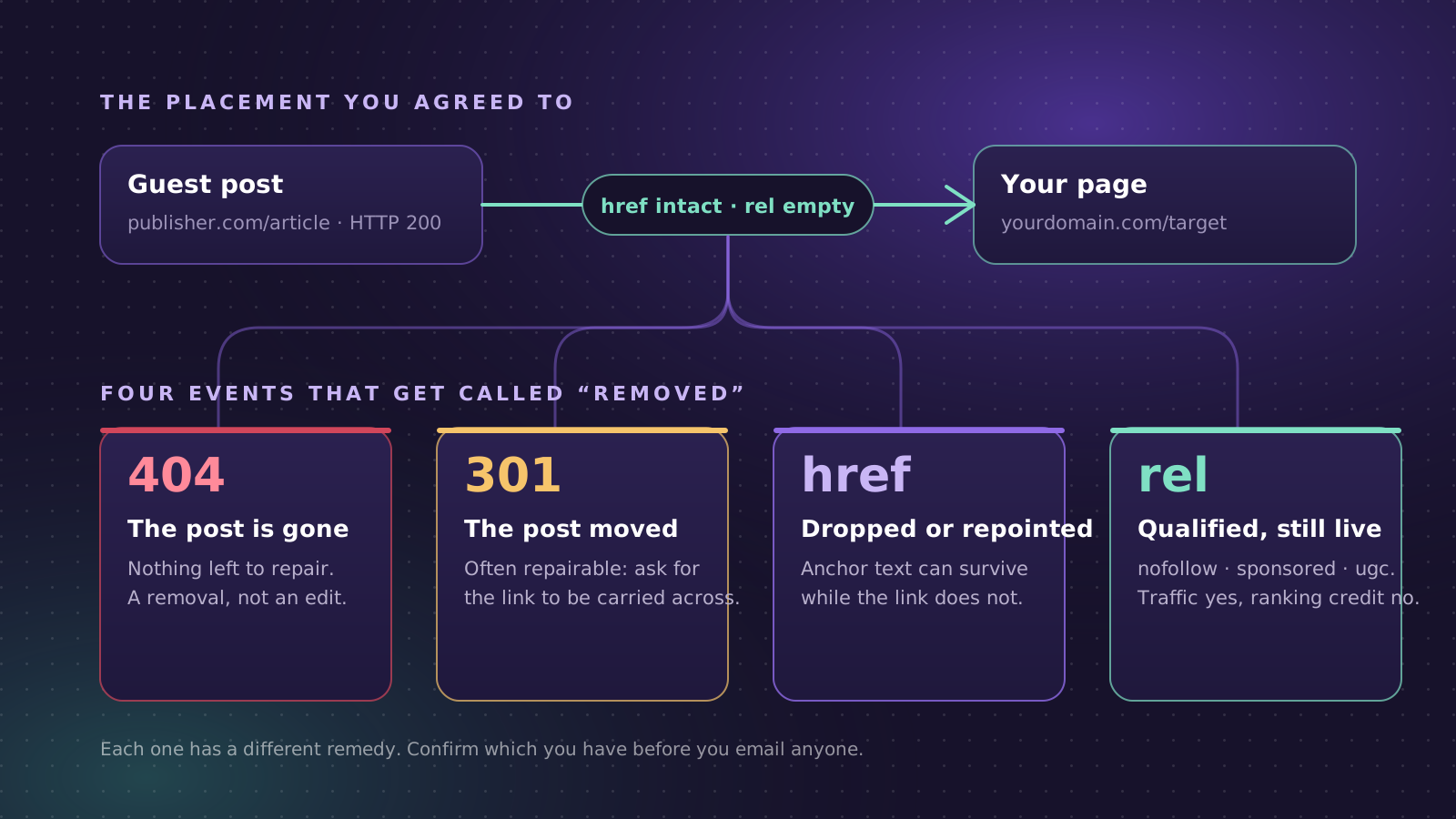
This is our suggested record structure, not a claim that every tracker stores every field. If the link later changes, use the missing guest-post link guide for diagnosis rather than treating every difference as a deletion.
Lifespan is also the input that decides whether a paid placement was worth buying. A link at $400 that stays live for two years is a different purchase from the same link pulled after ninety days. The backlink value calculator works out payback and break-even from your own cost, traffic and conversion numbers, with the formula printed under every result.
A Quora question asks where to find free, high-quality permanent backlinks (read 18 September 2026). It shows the question exists; promotional answers do not verify outcomes. No Trustpilot rating or review count was collected for this article.
To organize the ongoing work, explore the backlink manager or create an account. A workspace keeps context together; it cannot make another publisher’s editorial decision permanent.
BACKLINK MANAGEMENT
Stop building links by hand. Put them on automation.
Automated link building that keeps running month after month, with every placement recorded, re-checked and reported from the same workspace that holds your Search Console data.
Where this lands
Verdict
- Who this suits
- Site owners and teams willing to create useful original resources, pitch relevant editors and maintain what gets cited. Aim for durable usefulness, not an indefinite guarantee.
- Who it does not suit
- Anyone seeking guaranteed lifetime placements or buying unqualified paid links to manipulate rankings. A permanent label does not remove editorial risk or Google’s policy requirements.
- What we could not verify
- No survival rate, typical link lifespan, ranking uplift or vendor replacement success rate was established. Vendor statements are promises, not audited results. The Quora question is limited community evidence; no Trustpilot rating or review count was collected.